LNWR Electric Units

In 1914 the London & North Western Railway introduced 3-car EMUs for its London DC electrified lines including routes from London Euston to Watford and Broad Street to Richmond. The first four sets were built with Siemens traction equipment (after Westinghouse who were originally given the order failed to deliver) with a follow-on batch of 38 sets with Oerlikon equipment, the change of supplier to a Swiss firm was needed due to the outbreak of the First World War and therefore the unavailability of equipment from German manufacturer Siemens [1]!

Two views of 28249 now preserved at the NRM York

As well as different traction equipment, the Oerlikon sets had other differences compared to the Siemens sets. Originally the EMUs had first and third class accommodation, the first class compartments being very luxurious, but were downgraded to third class only as a wartime economy measure. The EMUs were built as 3-car sets (with some spare motor cars) and generally operated as a 6-car train.

Information
Number built: 356 (117 3-car sets + 8 spare cars)
Built: 1914-23
Builder: Metropolitan-Cammell
Engine: 4 Siemens or Oerlikon traction motors (630v DC third/fourth rail)
Power: (Siemens) 1, 000 hp (746 kW)
(Oerlikon) 1, 040 hp (776 kW)
Formation: Driving Motor Brake Third (DMBT)+Trailer Third (TT)+
Driving Trailer Third (DTT)

After the First World War a third batch of 75 sets were built, again with Oerlikon equipment [2]. Although some of the DC routes (some of which now are part of London Overground) were run down in the 1930s and following the Second World War, the LNWR sets (later operated by the LMS and British Railways) survived in use until 1960. Some sets were converted to prototype 25kv AC OHLE EMUs as AM1. One DMBT has survived into preservation.
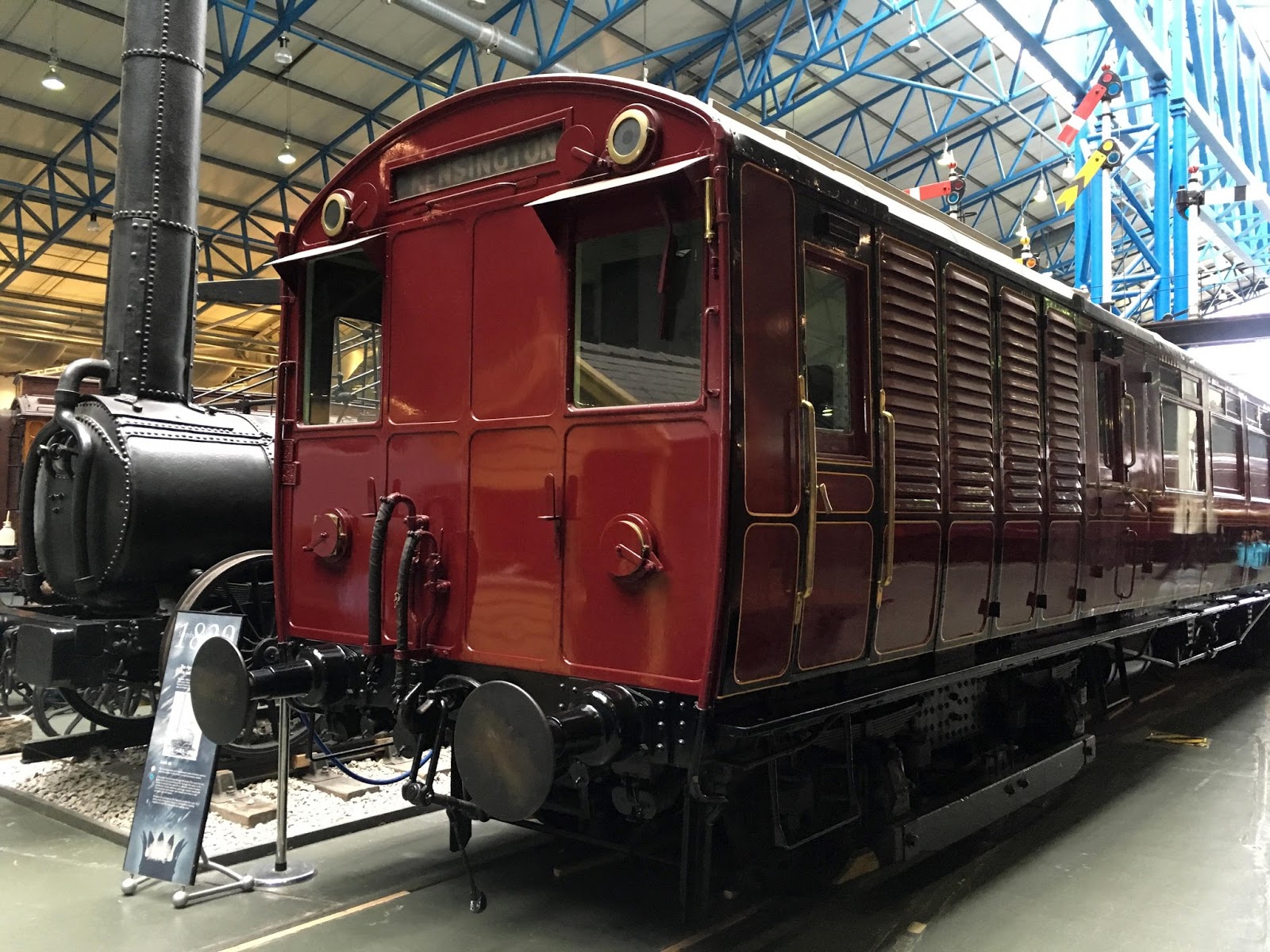
28249 is preserved in LMS livery

[1] R.L. Vickers, DC Electric Trains and Locomotives in the British Isles (David & Charles, 1986) p. 69
[2] Colin J. Marsden, DMU and EMU Recognition Guide (Ian Allan, 2013) p. 186

Class 85 (AEI/British Railways AL5)

British Railways, in it's wisdom, split an order for 100 AC electric locomotives for the West Coast Main Line five ways. The largest share however, was kept in house with 40 of the locomotives built at BR's Doncaster Works using AEI electrical equipment. The Class 85 was similar to the BRCW Class 81, having the same AEI equipment. However, the Class 85 had semiconductor based rectifiers (at first a mixture of germanium and silicon, later retrofitted to be all silicon) and rheostatic braking [1].

Information
Number built: 40
Built: 1961-64
Builder: Associated Electrical Industries / BR Doncaster
Motor: 4 AEI 189 traction motors (25kV AC OHLE)
Power: 3, 200 hp (2, 400 kW)
Wheel arrangement: Bo-Bo

The Class 85 (along with the 81) proved to be the best of the prototype AC electrics, their only real issue being ride quality at top speed. They were displaced from expresses by the Class 86 but remained in service on secondary passenger services and freight until the early 1990s when they were finally withdrawn. One has been preserved.
85 006 preserved at Barrow Hill


[1] Brian Haresnape, Electric Locomotives (Ian Allan, 1983) p. 61

Class 180 Coradia 1000

The Class 180 is part of the Coradia 1000 family of Diesel Multiple Unit like the Class 175. The Class 180 however, has a very different appearance with a sleek streamlined exterior [1]. The Class 180 was built for First Great Western to supplement High Speed Trains on services out of London Paddington. Like the iconic HST, the Class 180 is also able reach 125 mp/h. Unfortunately, the Class 180s had a number of faults and problems and their entry into service was delayed until the end of 2001, over a year late.
Grand Central 180 at London Kings Cross

Information
Number built: 70 (14 5-car sets)
Built: 2000-01
Builder: Alstom Birmingham
Engine: Cummins QSK19 diesel per car
Power: 3, 750 hp (2, 800 kW)
Formation: Driving Motor Standard Lavatory (DMSL)+Motor First Lavatory
(MFL)+Motor Standard Lavatory (MSL)+Motor Standard
Lavatory Restaurant Buffet (MSLRB)+DMSL

FGW (by now GWR) replaced most of their 180s with extra HSTs, which they received from cascades elsewhere though GWR kept five sets for services on the Cotswold Line for a time. The Class 180s have found further use with other operators. Nowadays, they are operated by Grand Central and East Midland Railway. They have also been operated by a number of other operators including Northern Rail and Hull Trains.
EMR 180 109 at Leicester


Grand Central 180 102 passes through Peterborough

In FGW/GWR days a Class 180 at Worcester Foregate Street

Grand Central 180 101 at York

[1] Colin J Marsden, DMU and EMU Recognition Guide (Ian Allan, 2013) p. 166

Bath Electric Tramways Company

The Bath Electric Tramways Company began operations in 1904, taking over from an earlier horse drawn narrow gauge system. The initial fleet of trams were double deckers built by G.F. Milnes. These had Milnes four wheel trucks and British Westinghouse electrical equipment. The open topped trams had seating for fifty five passengers. They were later augmented by a smaller number of single decker trams.
Number 3 and a friend [1]


Information for double deckers
Number built: 18
Built: 1903-04
Builder: G.F. Milnes
Motor: 2 Westinghouse 49-B electric motors (500v DC OHLE)
Power: 60 hp (45 kW)

The company was taken over by the Bristol Tramways & Carriage Company in 1936, who began the process of replacing the trams with motor buses. The final trams ran in Bath in 1939. No electric trams have survived though one of the original horse drawn trams is preserved.
Walcot Street depot, a building which still exists

Number 22


[1] "The tramway system of Bath, England", Street Railway Journal Vol. XXIV No. 10 (March 5 1904) p. 371

Class 73 (BR Eastleigh / English Electric 1,420/600hp Electro-Diesel)

Despite the fact that diesel locomotives often spend a fair amount of time operating along electrified routes it is unusual that British Rail only ever built two classes of electro-diesel locomotives (these days better known as bi-mode) which could operate both as electric or diesel locomotives, the Class 73 and Class 74. Both were operated by BR's Southern Region, the Class 73 is the only survivor [1]. A number have been rebuilt and upgraded in the last few years (Class 73/9) so they look set to remain in service for a long time to come. these will be covered separately.
GB Railfreight 73 128 leads a class mate through Tonbridge


Information
Number built: 49
Built: 1962, 1965-67
Builder: BR Eastleigh / English Electric
Motor: English Electric 4SRKT Mk II diesel
EE542A or EE546/1B traction motors (750v DC third-rail)
Power: 1, 420 hp (1, 059 kW) - Electric
600hp (447kW) - Diesel
Wheel arrangement: Bo-Bo

The Class 73 is an electric locomotive designed to work with SR's 660-750v DC third-rail system. It also has a small diesel engine for operating on non-electrified lines or if the power is off. They are highly versatile locomotives that served on a whole range of traffic in Southern England, being true mixed traffic locomotives they could be found on passenger and freight services. 

Their numbers however were reduced in the privatisation era but only ten have been scrapped to date. Twelve have been preserved with the rest still operating on the network most usually employed hauling engineering trains.

Sub-class Details
73/0 Original prototype batch, originally to have been called the Class 72
73/1 Main production batch, higher power output and speed
73/2 Modified for Gatwick Express push-pull duties
(coupled to the Class 488 and 489)
73/9 Re-engineered and upgraded examples

They are currently operated by GB Railfreight, Network Rail, South Western Railway and Southern. 
GB Railfreight 73 136 is led through Kidderminster

73 140 preserved in NSE livery seen at Eridge

73 136 at Kidderminster Town

Another view of 73 140

73 210 preserved in Intercity livery at Wirksworth


[1] Colin J. Marsden, Traction Recognition (2nd Edition) (Ian Allan, 2008) p. 82

East Ham Corporation Tramways

East Ham Corporation Tramways operated in East London starting in 1901, the second earliest electric tramway in London [1], though only stretched for just over eight miles. It continued in operation until 1933 when it became part of London Transport. The company operated seventy trams in total, the earliest being built by Dick, Kerr. Later trams were built by Brush, some of these replaced earlier trams.
Original tram [2]


Information for original cars
Number built: 35
Built: 1901-03 
Builder: Dick, Kerr
Motor: 2 Dick, Kerr 25-A electric motors (500v DC OHLE)
Power: 50 hp (37 kW)

The original batch of trams, built by Dick, Kerr, were open-top double deckers built to the popular Liverpool or Bellamy design with a reversed stairway. The trams used a Brill 21-E truck and could carry up to 56 passengers.

[1] R.W. Kidner, The London Tramcar 1861-1952 (Oakwood Press, 1992) p. 105
[2] "New railway in London", Street Railway Journal (Vol. XVIII No. 10 September 7 1901) p. 287