Showing posts with label Electric Railway and Tramway Carriage Works of Preston. Show all posts

Northern City Line Stock

The Northern City Line was a London railway opened by the Great Northern Railway in 1904. The line originally stretched from Finsbury Park to Moorgate and was underground though the tunnels were built larger than contemporary "tube" tunnels and were able to operate full sized trains. The first batch of motor cars and trailers was built by the Electric Railway & Tramway Carriage Works (a.k.a. Dick, Kerr) with teak and mahogany bodies on a steel underframe. In 1906 Brush built a second batch of cars with steel bodies. All the motor cars used British Thomson-Houston electrical equipment.
Wooden bodied motor car, all images [1]


Information
Number built: 76 (31 motor cars 45 trailers)
Built: 1901-06
Builder: Electric Railway & Tramway Carriage Works, Preston
Brush Electrical Engineering
Motor: 2 British Thomson-Houston electric motors per motor car (550v DC fourth rail)
Power: 250 hp (186 kW) per motor car

The railway was bought by the Metropolitan Railway in 1913 and became part of the London Underground, eventually becoming part of the Northern Line. In 1976 it was returned back to British Rail and is currently operated by Great Northern using Class 717s. As for the original rolling stock it was replaced by Standard Stock in 1939.
Motor bogie

Trailer


[1] "The Great Northern & City Railway", The Street Railway Journal Vol. XXIV No. 10 (March 5 1904) p. 340

The Wakefield and District Light Railway

The Wakefield and District Light Railway was a tram network which opened in 1904 [1] and was taken over by Yorkshire (West Riding) Electric Tramways soon after. The Wakefield tram network was centred the Bull Ring and had three lines. It also linked to other tram networks covering a wide area of the West Ridings. Together with it's sister network, the Yorkshire (West Riding) Electric Tramway based in Castleford, the tramway eventually comprised nearly forty kilometres of track. The network was closed down in 1932, the services taken over by motor buses [2].
Standard car [1]


Information
Number built: 55
Built: 1904
Builder: Electric Railway Carriage & Wagon Company
Motor: 2 Dick, Kerr electric motors (550v DC OHLE)

Fifty five double decker trams were built by the Electric Railway Carriage & Wagon Company of Preston. The trams had a single Brill 21E truck and had oak and pine floors for strength. The trams had Dick, Kerr electrical equipment.
Tram shed [1]

Bull Ring [1]

[1] "The Leeds, Wakefield & West Riding Tramways", Street Railway Journal (Vol. XXIV No. 23) Dec 3 1904, p. 986
[2] Charles Knapper, The Golden Age of Tramways (David & Charles, 1974) p. 307

London County Council B Class Tram

These trams, known as the B Class by London County Council, were to the standard open-topped design of Dick, Kerr of Preston and built by the Electric Railway & Carriage Company. They were smaller than earlier LCC trams, with fifty six seats, and were intended for less busy routes [1].

The trams took their power from an underground electric conduit instead of overhead lines as was more common. The B Class received a number of modifications early on in their lives. They were retrofitted with top covers [2] having originally left passengers on the top deck to the mercy of the elements. One interesting modification was the original reversed staircase was replaced by a direct staircase on Metropolitan Police instruction as the original staircase was considered to obscure part of the driver's view (the very similar preserved Leicester Corporation tram shows how the original staircase looked). The B Class trams were withdrawn from service by 1931 [3].

Information
Number built: 100
Built: 1903
Builder: Electric Railway & Carriage Company
Motor: 2 DK24A later Westinghouse 220 electric motors
(DC Conduit / OHLE)
Power: 84 hp (62 kW)

LCC 106 is preserved at Crich. It was converted to a snow broom after withdrawal from passenger service, it was also fitted with a trolley for overhead electric collection in 1925. It continued in service until 1952 when it was preserved. During the 1970s work began to restore it to a passenger carrying tram and to original open-topped condition.
LCC 106 at Crich

106 carries the London County Council livery
Front on view with Sheffield 510 on the left

[1] R.W. Kidner, The London Tramcar 1861-1952 (Oakwood Press, 1992) p. 57
[2] Robert J Harley, South London Tramways 1903-33 (Middleton Press, 2003) Fig. 111
[3] Kidner. p. 63

Sheffield Corporation Open-Topped Double Decker Tram

Among the earliest electric trams built for what would become one of the biggest fleets, G.F. Milnes and the Electric Railway & Tramway Carriage Works of Preston produced a number of open-topped double decker trams for the Sheffield Corporation Tramway in 1899 and 1900 to work alongside single decker trams. They were soon joined by other double decker trams built by Brush.

Information for ER&TCW Trams
Number built: 30
Built: 1900
Builder: Electric Railway & Tramway Carriage Works
Motor: 2 British Thomson-Houston GE52 electric motors (DC OHLE)
Power: 54 hp (40kW)

Within a few years the trams were fitted with top-covers though with open balconies. Sheffield Corporation rebuilt and modified their trams frequently with trams like the later preserved Number 74 looking very different when it left service than when it started. Number 74 gained a top cover, a different truck and electrical equipment in it's twenty two years in Sheffield and the following thirty years in Gateshead. Following withdrawal in 1951 the lower deck was sold to become a garden shed! Finally in 1990 it was preserved and has been rebuilt with a top deck from another Sheffield tram and a truck from a Leeds one.
Number 74 has been restored to working order at Crich

Top deck balcony

Entrance

Leicester Corporation Tramways

Leicester Corporation Tramways took over tram operations (which had been running in horse drawn form since 1874) in the city in 1901. The system was electrified, being one of the last of Britain's major cities to adopt electric tramways [1], and greatly expanded. It opened for electric operation in 1904 and included the rather busy Clock Tower Junction where six tram lines converged, the junction requiring over one hundred tons of track and rather complicated overhead lines. To launch the new service fifty nine new double decker electric trams were bought in early 1904 from the Dick Kerr Electric Railway & Carriage Company of Preston, forty more coming later the same year of which Number 76 (see below) was one of.

Twenty more trams arrived in 1913/14 for a new initiative in "Pay as you enter" boarding [2] (see photo below) with colour coded pre-paid tickets. The final trams arrived in 1920. Not long afterwards the Corporation began operating motor buses and in the early 1930s started to replace trams with buses. However the tram service managed to survive until after the Second World War with the last tram running in 1949.

Information for original trams
Number built: 99
Built: 1904-05
Builder: Electric Railway & Tramway Carriage Company of Preston
Motor: 2 Dick Kerr electric motors (550v DC OHLE)
Power: 50 hp (37 kW)

One of the survivors of the Leicester Corporation fleet is Number 76 . It was originally built as an open topped tram though a cover was added as with the rest of the fleet just before the First World War, inclement weather cutting into revenue. The tram continued to have open platforms and balconies but these were covered as well in 1929.

Number 76 survived in service until 1947. The body was sold to become a cricket pavilion in Yorkshire though in 1960 it was preserved at the Crich Tramway Museum and restored to it's 1920s condition though not with the original truck. One of the original batch of trams, Number 31, also still survives and is currently being preserved after decades serving as an outbuilding on a farm.
Survivor #76 at Crich

Abbey Road Tram Shed, public domain image [1]

Building of Clock Tower Junction, public domain image [1]

The Mayor and local politicians celebrate the start of Pay As You Enter, public domain image [2]

Another view of #76

[1] "The Leicester Corporation Electric Tramways",  Street Railway Journal (Vol XXIII No. 23, June 1904) p. 830
[2] "Prepayment zone system inaugurated in Leicester", Electric Railway Journal (Vol XLI No. 16 April 1913) p. 720
Cardiff Corporation 131

Tramway companies employed a number of vehicles for maintenance and, what would be termed on the railways, departmental use. One frequent need were for water cars to help keen the roads (and tracks) as clear as possible from mud and animal waste (horse drawn vehicles still being the majority at the start of the twentieth century). Many purpose built water cars were built with a wide variety of different set-ups depending on the operator's requirements [1].

Information
Number built: 1
Built: 1902
Builder: Electric Railway & Tramway Carriage Works of Preston
Engine: 2 GEC 200K traction motors (550v DC OHLE)
Power: 60 hp (45 kW)

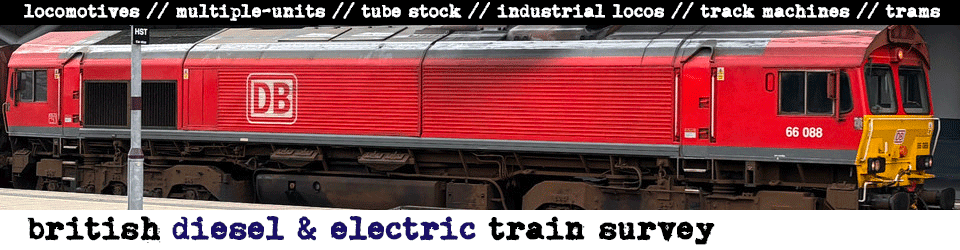
Cardiff Corporation 131 is the only water car to have survived into preservation. A small single truck tram, it was built for the Corporation in 1902 with a thousand gallon water tank. It was in use until 1950 when the Cardiff tram system was closed. Originally 131 had open sides but wooden panelling was added in 1913, which was not usual for water cars which were usually kept open. The tram was also fitted out for rail grinding and was used for staff transport.
Cardiff Corporation 131 at Crich Tramway Museum

Original configuration, public domain image [2]
131 isn't large, compare the double decker tram behind

The water tank can be seen inside behind the cab

131 has a cab at both ends
[1] R.W. Rush, British Electric Tramcar Design (Oxford Publishing, 1976) p. 119
[2] "The Cardiff Corporation Tramways", Electric Railway Journal Vol. XX No. 1 (July 1902) p. 42